Social Financial Inclusion via the 8171 Digital Infrastructure: A 2026 Roadmap
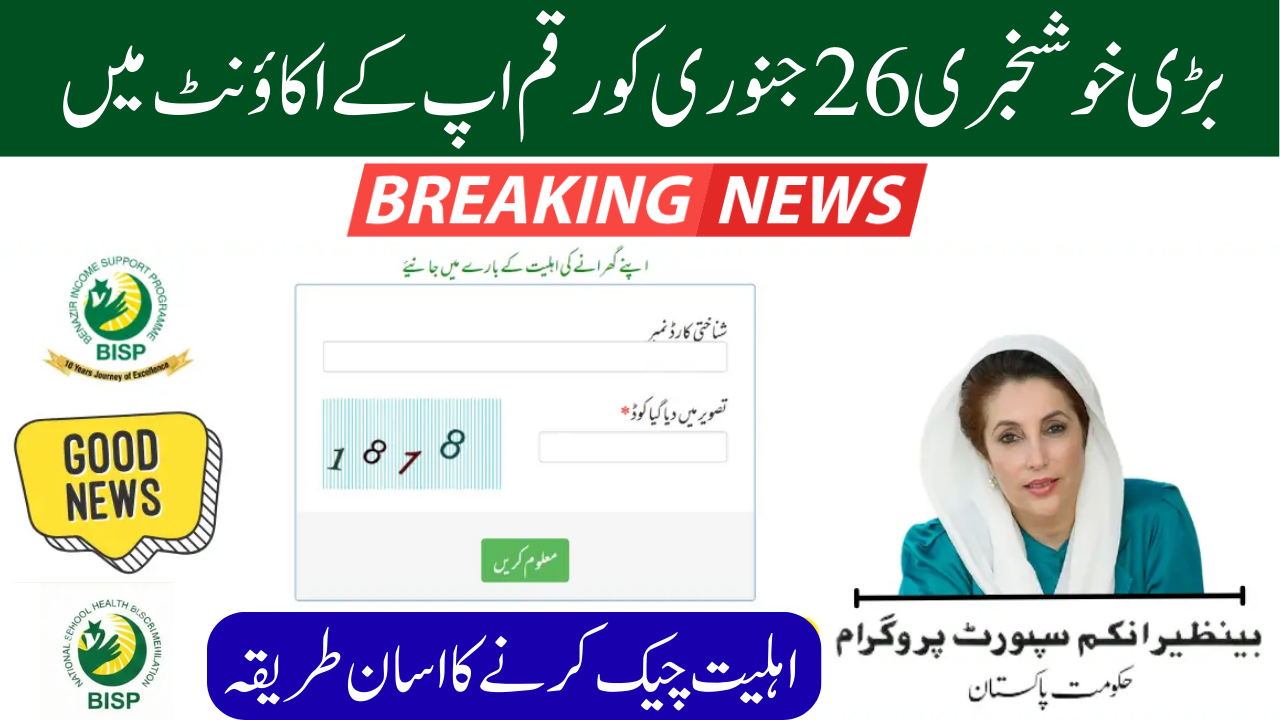
2026 has seen a dramatic change in the social welfare scene. The 8171 Web Portal, an advanced digital gateway created to offer an open and effective conduit between the state’s welfare resources and the people who need them the most, is at the center of this development.
The era of opaque bureaucratic obstacles is over; the current interface is a masterpiece of user-centric design that seeks to provide financial dignity with only a few clicks.
You can read more: 8171 Web Portal 2026: Easy Login to Check CNIC Status Online
The Paradigm Shift: Why 8171 Matters
Navigating government systems can often feel like an exercise in futility. However, the 8171 framework—primarily supporting the Benazir Income Support Program (BISP)—has been recalibrated to act as a “Digital Second Brain” for applicants. It isn’t merely a login page; it is a real-time database that cross-references socio-economic indicators to ensure that every rupee spent is a rupee well-invested in human capital.
By utilizing this portal, eligible individuals bypass the “middleman” culture, gaining direct access to their application lifecycle, from initial registration to the final disbursement of funds.
Technical Snapshot: The Portal at a Glance
| Strategic Component | Implementation Detail |
| Interface URL | Official 8171.bisp.gov.pk Domain |
| Authentication Mode | Dual-Factor (CNIC + Mobile OTP) |
| Processing Engine | Real-time NADRA Database Integration |
| Verification Metric | PMT (Proxy Means Test) Score Analytics |
| Security Protocol | End-to-End SSL Encryption & Biometric Sync |
| Update Cycle 2026 | Monthly eligibility refreshes |
You can read more: Overview of Ehsaas 25000 Payment via the BISP 8171 Web Portal 2026
Mastering the Enrollment Journey
The registration process within the 8171 ecosystem is built on the principle of identity integrity. To initiate your journey, the portal requires your 13-digit Computerized National Identity Card (CNIC) number. This is not just a number; it is the “unique key” that unlocks your socioeconomic history.
The Registration Workflow
• Users must enter their CNIC and a personal mobile number for credential entry.
• A One-Time Password (OTP) is sent to safeguard against identity theft, allowing only the rightful owner to access or modify their file.
• The portal retrieves records from the National Socio-Economic Registry (NSER), and if the data is over 3 years old, users will be prompted to visit a Dynamic Survey Center.
Understanding Eligibility: The Science of the PMT Score
The 8171 portal uses a sophisticated algorithm to determine your “Proxy Means Test” (PMT) score. This score is a composite value derived from several variables:
• **Household Composition:** Focuses on the number of dependents, including children and the elderly.
• **Asset Mapping:** Involves the analysis of land ownership, vehicle registration, and utility bill history.
• **Travel History:** Frequent international travel may indicate a profile for high-income exclusion.
The portal’s “Verify Eligibility” tool allows you to see exactly where you stand. If the system returns a “Not Eligible” status, it is often due to a PMT score exceeding the current threshold set by the federal government for 2026.
You can read more: 8171 Tracking Portal 2026: BISP Rs 13,500 Verify Karne Ka Asaan Tariqa Payment
Critical Documentation for a Seamless Experience
While the portal is digital, the data it consumes must be backed by physical reality. To avoid “Data Mismatches,” ensure you have the following assets ready:
-
Original CNIC: Must be valid (not expired).
-
B-Forms: For all children in the household to claim educational stipends (Taleemi Wazaif).
-
Utility Records: Recent electricity or gas bills to verify residency and consumption patterns.
-
Mobile SIM: Must be biometrically verified in the applicant’s name.
Troubleshooting the “Digital Divide”
Common errors on the 8171 portal are rarely system failures; they are usually data discrepancies.
• “No Record Found” indicates an individual has not participated in the NSER survey, requiring a visit to the nearest BISP Tehsil office for a new survey.
• “Payment Paused” in 2026 is often associated with the Digital Wallet Migration, urging users to connect their 8171 accounts to verified mobile wallets to mitigate fraud at retail locations.
You can read more: BISP Center Near Me: How to Find Pakistan’s Nearest 8171 Registration Office
In conclusion
For transparent government, the 8171 site is the gold standard. Social welfare is now determined by the facts, not “who you know,” thanks to the government of 2026’s shift from a paper-based system to a high-fidelity digital architecture. The portal serves as a barrier against poverty for the user and as a scalpel for the state to precisely target resources.

FAQs
1. Can I update my mobile number through the portal if I lost my old SIM?
Direct number updates are restricted for security. To update your contact point, you must visit a BISP registration center with your original CNIC for biometric re-verification. This “physical-first” security measure prevents hackers from redirecting your funds.
2. How to Locate the Nearest 8171 Registration Office in Pakistan: BISP Center Near Me
Yes. If your financial situation has deteriorated (e.g., loss of a breadwinner or medical crisis), you can request a recertification survey. This allows the 8171 system to overwrite old data with your current, more vulnerable status.
3. How does the 8171 portal protect against “ghost beneficiaries”?
The 2026 update utilizes AI-driven pattern recognition. If the same mobile number or address is linked to multiple unrelated CNICs, the system triggers a mandatory field audit, ensuring that resources reach authentic, needy families only.